Shopping malls face complex parking demands throughout the day, driven by customer traffic, employee parking, deliveries, and peak periods. A suitable vehicle parking management system should therefore do more than operate entrance barriers. It should coordinate vehicle recognition, access, parking guidance, payment, data management, and daily operations as one connected workflow.
At AKE Parking, we provide integrated smart parking and access solutions for commercial complexes and other high-traffic environments. Our approach is to match parking technology with the actual operating requirements of each project rather than treating individual devices as isolated products.
What Should a Shopping Mall Vehicle Parking Management System Control?
A shopping mall system should cover the complete vehicle journey from entry to exit. This normally includes license plate recognition, barrier control, parking-space guidance, payment, vehicle classification, and centralized management.
Our parking management system uses an integrated barrier with a high-definition license plate recognition camera, flashing light, VMS, automatic barrier, controller, and parking management software. The system is designed to support efficient entrance and exit management and non-stop vehicle access.
For mall operators, this integration matters because a problem at one stage can affect the entire parking experience. If entry recognition, payment, guidance, and exit management operate independently, operators may need additional manual coordination.
How Important Is Parking Guidance for Shopping Malls?
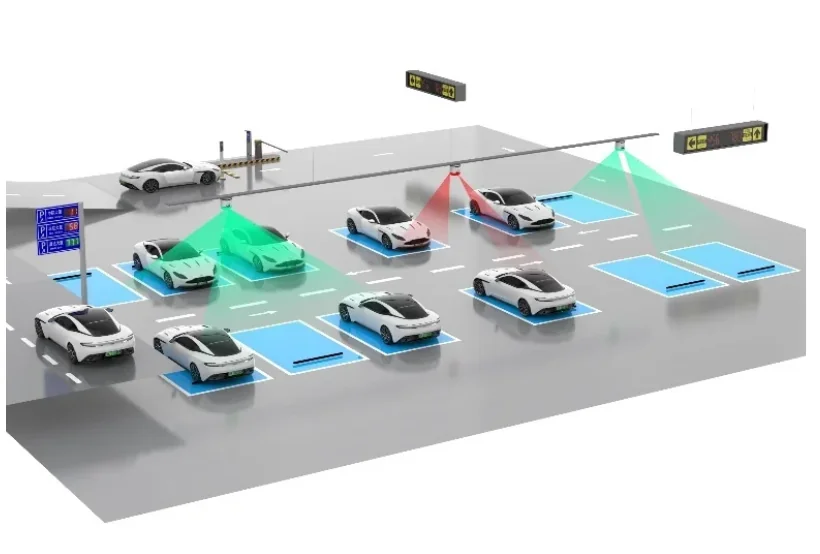
Parking guidance helps drivers find available spaces quickly, especially when parking demand peaks during weekends, holidays, and promotional events.
Our system can collect parking-space information through cameras, ultrasonic sensors, geomagnetic sensors, and loop detectors. The collected information can then be transmitted to the control system and displayed through variable message signs showing available spaces and directions.
For a large shopping center, this can help reduce unnecessary circulation inside the garage and make available capacity easier for drivers to identify. It also gives operators real-time information that can support parking management decisions.
What Payment and Customer Management Features Should Operators Consider?
A mall parking system should provide flexible payment and customer-management functions because different users may require different parking rules.
Our parking management platform supports temporary, monthly, and VIP customer classifications, as well as blacklist and whitelist management. It can also collect payment-method and payment-amount information for operational analysis.
For B2B projects, these functions are useful when a mall needs to manage multiple customer categories or integrate parking policies with its commercial operations. Operators can also use parking finance information to support reconciliation and management analysis.
How Can a Mall Benefit from Centralized Parking Data?
Centralized data brings equipment status and parking activity into a single management platform, giving operators a clearer view of daily parking operations.
Our system collects information such as parking time, parking position, occupied and available spaces, and vehicle volume. The management interface can display the real-time status of detectors and dynamic signs, while reports can be generated to assist daily parking management.
This capability is especially valuable for shopping malls where parking demand can change significantly throughout the day. Instead of relying only on observations from individual parking lanes, operators can use system data to understand traffic and equipment conditions.
What Should Buyers Look for in Car Park Management System Suppliers?
When comparing car park management system suppliers, mall developers, operators, and system integrators should evaluate the complete solution rather than focusing only on the price of individual hardware.
Important criteria include system integration, product reliability, scalability, software capabilities, compatibility with existing infrastructure, technical documentation, customization, and after-sales support. A supplier should also understand how parking guidance, access control, payment, and management software work together.
We provide integrated parking solutions covering LPR and barrier systems, parking guidance, identity and access authentication, RFID access control, and other smart mobility technologies. Our solutions are designed for shopping malls as well as offices, airports, smart cities, and industrial environments.
Why Choose AKE Parking for Shopping Mall Projects?
At AKE Parking, we focus on system-level solutions for international B2B customers, including system integrators, parking operators, project builders, and channel partners. We provide consultation, customized solution design, production and delivery, deployment support, technical documentation, and ongoing technical assistance.
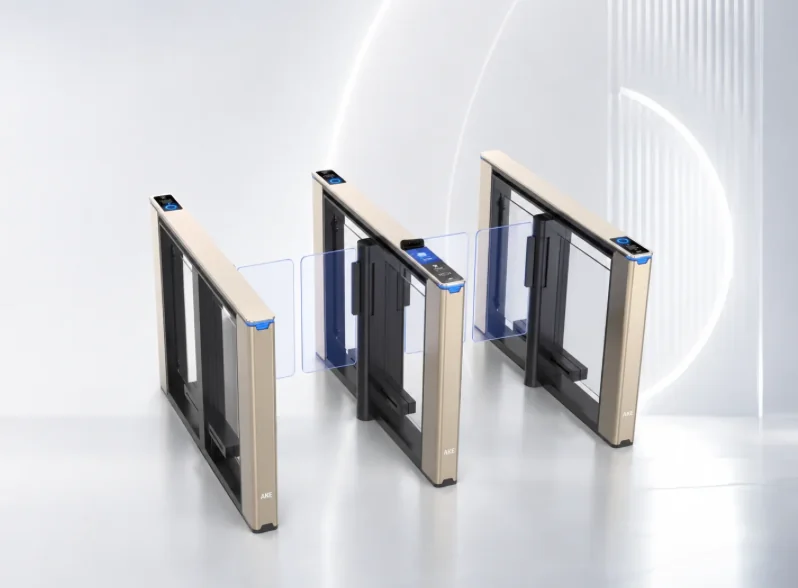
Our product portfolio includes LPR and barrier systems, parking guidance systems, curbside management, identity and access authentication, pedestrian turnstiles, and RFID access control systems. This broader portfolio allows us to coordinate vehicle and access requirements instead of supplying only one parking component.
For shopping mall projects, we recommend beginning with the site’s traffic volume, number of parking spaces, lane configuration, peak-hour demand, payment model, parking guidance requirements, and existing infrastructure. These factors provide a stronger basis for selecting the right vehicle parking management system.
With our experience in smart parking and access control, AKE Parking works with project owners, operators, contractors, and system integrators to explore practical solutions for different commercial parking scenarios. The aim is simple: smoother vehicle flow, more effective parking management, and greater operational efficiency for businesses alongside a better experience for drivers.