Parking facilities are undergoing a fundamental shift driven by rising vehicle volumes, stricter security requirements, and growing demand for operational data. A legacy parking system may depend heavily on manual processes and isolated equipment, while a modern automated parking management system connects vehicle access, parking guidance, authentication, and management functions.
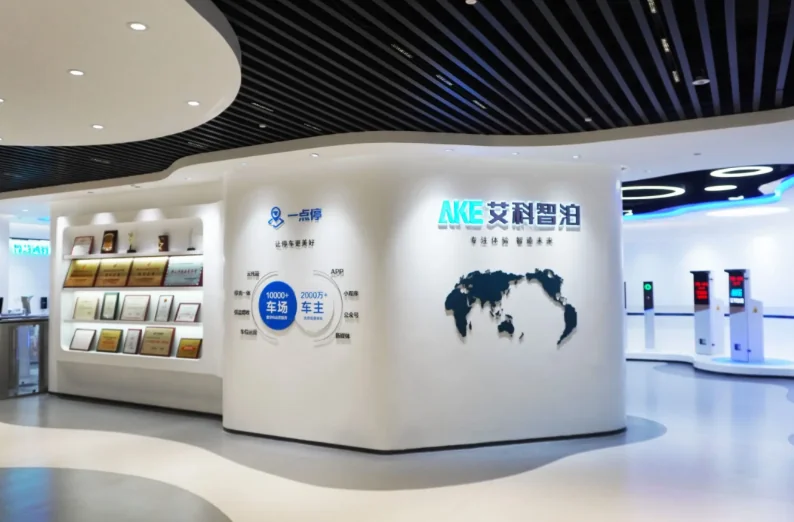
At AKE Parking, we develop integrated smart parking and access solutions for commercial complexes, offices, airports, residential communities, industrial parks, and smart-city projects. Our goal is not simply to replace old equipment, but to help businesses build a more connected and manageable parking operation.
What Is the Difference Between Legacy and Modern Parking Management?
The fundamental difference is how information and equipment are connected. Legacy systems often operate individual functions separately, whereas modern systems can connect access, guidance, authentication, and operational data within a broader management architecture.
A traditional facility may use a barrier for entry, a separate payment process, and manual methods to monitor available spaces. Modern systems can combine LPR cameras, barrier gates, parking management software, parking guidance, and access-control technologies.
For B2B operators, this distinction matters because the parking system affects both daily operations and long-term infrastructure planning.
How Does an Automated Parking Management System Improve Vehicle Access?
Modern automation ensures consistent vehicle access using identification and authorization instead of relying entirely on manual checks. LPR technology, for example, can identify vehicles and work with barrier control to regulate authorized entry and exit.
Our product portfolio includes LPR and barrier systems designed for AI-powered vehicle access control. We also provide different access authentication technologies, including facial recognition, QR codes, cards, mobile access, and RFID solutions.
This allows system integrators and property operators to select an access method according to the project’s security requirements, user groups, and operating model.
Why Is Parking Guidance More Important in Modern Systems?
Parking guidance addresses a problem that a simple entrance barrier cannot solve: helping drivers find available spaces after entering the facility.
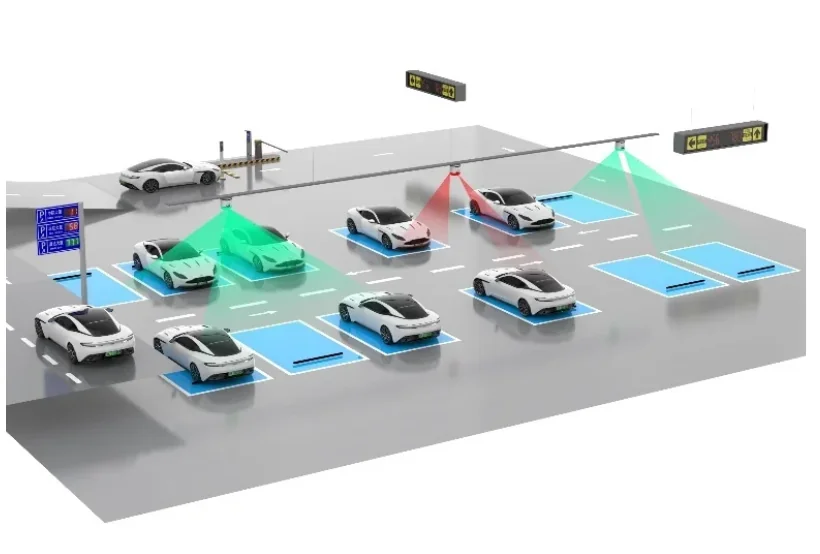
Modern parking guidance systems can provide real-time information about parking availability and help improve traffic flow and space utilization. Our portfolio includes dedicated parking guidance solutions for this purpose.
For example, our Ultrasonic Parking Guidance Sensor uses non-contact ultrasonic ranging to detect parking-space occupancy. It supports DC 12–30V input, consumes no more than 2W, communicates through RS485, and operates from -10°C to 55°C.
At the entrance, our Entrance Parking Guidance Display can show available spaces by zone or floor. Its published specifications include 100–240V, 50/60Hz power input, IP54 protection, RJ45 and RS485 interfaces, and an operating temperature range of -25°C to +75°C.
These functions demonstrate how modern parking management can turn individual parking-space information into useful guidance for drivers and operators.
How Do Modern Systems Handle Data Better?
Another distinction would be data visibility. Legacy systems may leave operators dependent on manual records or separate equipment interfaces. Modern systems are designed to make parking information more accessible for operational analysis and centralized management.
For a commercial facility, useful information should include vehicle entry and exit activity, parking occupancy, payment activity, equipment status, and traffic patterns. This information can support decisions about staffing, parking policies, maintenance, and capacity utilization.
The goal is to use this data to understand how the facility is performing and identify operational problems earlier.. Instead, the data should help operators understand how the facility performs and identify operational problems earlier.
What Should Car Park Management System Suppliers Consider During an Upgrade?
For businesses evaluating car park management system suppliers, the most important consideration is whether the supplier can support the complete project rather than provide isolated hardware.
A modern parking project may involve LPR cameras, barriers, parking guidance sensors, displays, payment equipment, access authentication, software, networks, and third-party integrations. Compatibility and system architecture therefore deserve attention before equipment is selected.
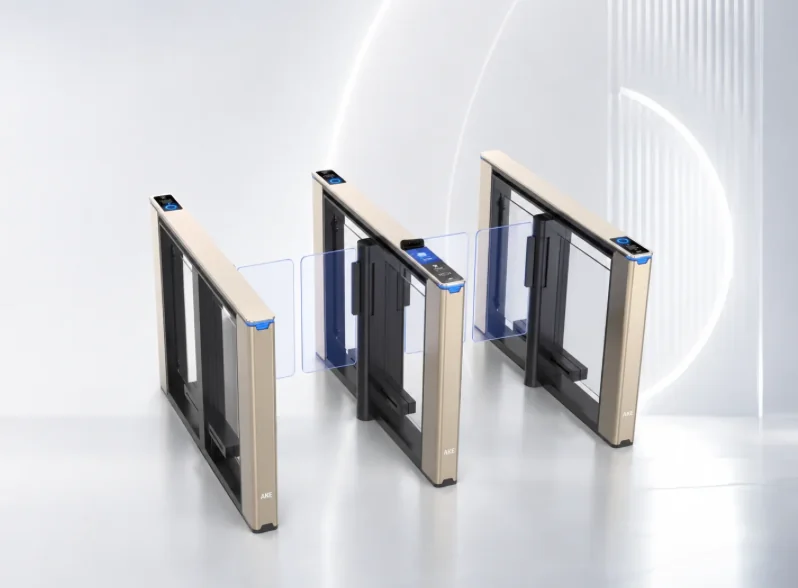
We provide products across parking and access-control categories, including LPR and barrier systems, parking guidance, curbside management, identity and access authentication, pedestrian turnstiles, and RFID access control. Our current business model also supports OEM/ODM customization and system integration requirements.
For integrators, operators, and project builders, this broader product scope can make it easier to develop a solution around actual site requirements.
When Should a Business Replace a Legacy Parking System?
Replacement should be considered when the existing system can no longer support operational requirements, expansion, integration, security, or reliable maintenance. However, businesses do not always need to replace every component at once.
A phased upgrade can be more practical. Operators can first identify the most important bottlenecks, such as manual vehicle identification, poor parking visibility, disconnected access systems, or insufficient operational data. The upgrade can then prioritize the functions that produce the greatest business value.
We support both new parking projects and existing-system upgrades by reviewing site requirements and recommending combinations of parking hardware, access-control devices, and management software.
Why Choose AKE Parking for Modern Parking Upgrades?
We combine smart hardware, software, parking management, and access-control technologies to support different operating environments. Our solutions are designed for scalable parking operations, with products covering vehicle entry, parking guidance, authentication, and pedestrian access.
As AKE Parking, we understand that modernization is ultimately a business decision. The right solution should improve operational efficiency without creating unnecessary integration complexity.
The difference between a legacy parking system and a modern automated parking management system therefore goes far beyond new equipment. It is the transition from isolated processes toward connected access, guidance, information, and control. For businesses planning that transition, working with experienced car park management system suppliers can lay a stronger foundation for reliable and scalable parking operations.