A returning driver remembers the last four characters of a registration plate but cannot recall the parking floor. An availability sign cannot answer that question. Finding the vehicle requires a connection between a searchable clue and its actual parking location, followed by directions that make sense from the driver’s current position. Software supports this service through three linked tasks: establishing location, confirming the match, and presenting a usable route.
Why Vacancy Data Does Not Locate a Vehicle
An occupied-space reading describes a bay, whereas a vehicle-location record identifies what is parked there. The distinction matters because a floor with eighty occupied spaces still leaves eighty possible places to check. A car-finding service needs an association between a vehicle and a particular space or mapped location, rather than an aggregate count of how many bays are taken.
Sensors establish space status, and the management layer combines those readings to support availability displays. Vehicle identification adds a different piece of information to this workflow.
In car parking management system software, a searchable record must connect the identification clue with the relevant location. Without that connection, a correct occupancy total can coexist with an unsuccessful vehicle search.
The association also needs to stay current. A vehicle that leaves one bay and parks elsewhere creates a different location problem from a vehicle remaining stationary. During commissioning, a search can be repeated before and after a controlled relocation to check the result against the actual space. The test examines the information relationship, rather than screen appearance alone.
Questions for car park management system suppliers therefore concern the source of the location record and its updates. Can the sensing arrangement distinguish the required bays? Which identifiers reach the search service? How does a location change become visible at the terminal? Where floors share bay numbers, a demonstration using known vehicles and spaces clarifies these questions.
Turning Partial Clues Into a Confirmed Match
A search result becomes useful only when the returning driver can recognize the vehicle it represents. An exact plate number offers a narrow matching clue; a remembered fragment can require a broader search. A parking-space number provides another route where the driver has retained that detail. The search interface must turn these different inputs into results that can be checked.
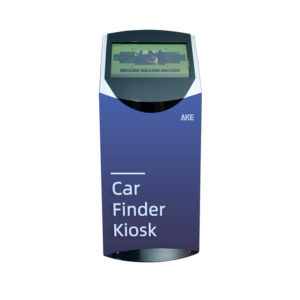
Our AKE Parking 2D/3D Car Finder Kiosk accepts exact or fuzzy searches using plate numbers or parking-space numbers. It presents a vehicle image, parking location, and suggested route on a 2D or 3D map. The image gives the driver a confirmation step before following directions, while the location identifies the relevant destination. Recognition of the displayed vehicle connects the query with a physical object.
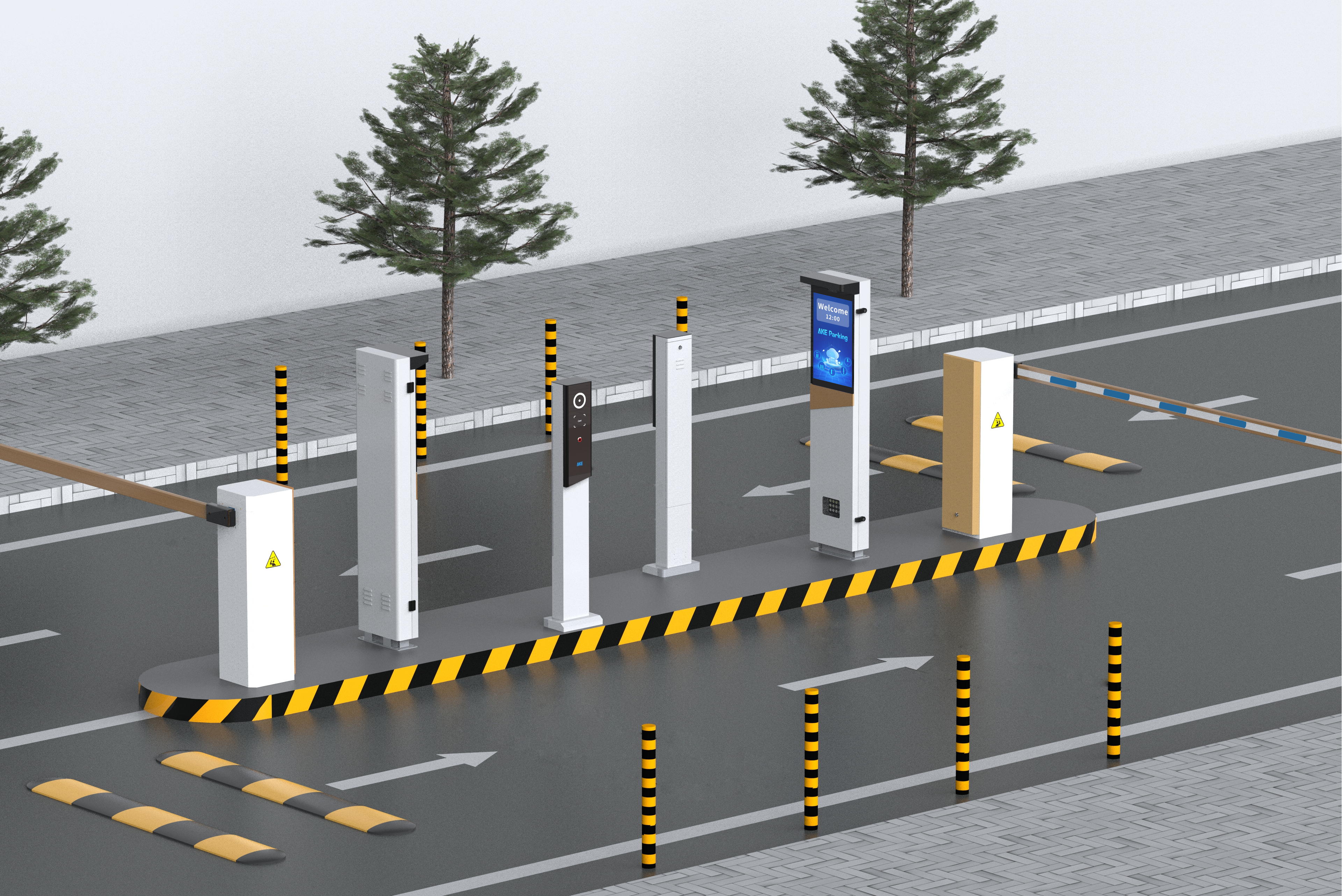
Behind the interface, our PVD30 combines bay detection, plate recognition, video recording, seven-color status indication, and Bluetooth beacons. It detects up to three bays on one side and specifies 99.5% accuracy for parking occupancy status.
That figure concerns whether spaces are occupied; it does not express plate-recognition accuracy, search success, or route accuracy. Each function needs its own appropriate acceptance check.
For car parking management system software, a convincing search demonstration includes incomplete clues as well as a fully remembered plate. Review the returned images and location labels when several plausible matches exist.
The evaluation agreed with car park management system suppliers can examine whether the available evidence lets a driver distinguish the intended vehicle, rather than merely whether the terminal produces any result.
Taking the Search Result Across Floors
Knowing the destination floor does not reveal which lift, staircase, or corridor leads there from a particular terminal. A useful route connects the search location with recognizable transitions through the building. A 2D view can explain horizontal movement; a 3D representation can communicate relationships between levels. If the map misrepresents the accessible path, neither display style will help.
Route testing for car parking management system software can begin at the terminal and continue to the parked vehicle. Compare the suggested path with actual entrances, floor labels, and permitted pedestrian connections.
Where a corridor is unavailable or access is restricted, the displayed instruction needs to correspond to the usable route. The map is an operational representation of the building, rather than decoration around a search result.
Our PVD30’s Bluetooth beacons support mobile 2D/3D navigation across floors. Mobile use still depends on the project’s navigation arrangement and the receiving device. Our 2D Car Finder Kiosk handles a different task. It combines vehicle search and route guidance with multimedia information.
That model has a 32-inch, 1920-by-1080 screen, ten-point capacitive touch, wired networking, and Wi-Fi; its multimedia connections do not establish every possible parking-platform integration.
The route discussion with car park management system suppliers needs to connect maps, terminal positions, and information updates. Our software can connect to customer hardware, with the required interfaces determined for the project.
Existing sensing equipment is useful only if its information supports the intended search and location functions. A connected screen and a current, followable route are separate commissioning outcomes.
Try the complete return journey with a partially remembered plate: inspect the matching vehicle image, identify the floor, and walk the suggested path. Any break between those steps identifies a specific service requirement. A successful search ends when its information becomes a route the returning driver can actually follow to the vehicle.