Answer first: an exhibition center parking management system should manage the full vehicle journey, not only the gate. The right stack links city-level guidance, LPR or ANPR entry, barrier gate control, pre-payment, parking guidance, reverse car finding, whitelist rules, and operations monitoring into one coordinated platform.
Exhibition venues are high-pressure parking environments. Move-in, show days, closing peaks, and move-out can each create different vehicle rules, different lane pressure, and different payment behavior. A basic car parking management system can open a gate, but a smart parking management system must coordinate approach roads, lanes, payment, guidance, search, exceptions, and field service.
Why Exhibition Center Parking Breaks Down on Event Days
Exhibition centers are not ordinary parking sites. A mall has daily rhythm; a convention venue has sharp waves. During major exhibitions, nearby roads can overload before opening and again before closing. Payment queues slow exit lanes. Indoor garages are often multi-level and difficult to navigate.
Trucks, exhibitor cars, VIP vehicles, taxis, emergency vehicles, staff cars, and ordinary visitors also need different rules. That is why the best design starts with one operating question: where will congestion form first, and which part of the system can remove it before it reaches the lane?
The Seven-Layer Architecture of a Smart Parking Management System
A scalable vehicle parking management system for exhibition centers should be designed in layers. Each layer solves one pressure point, while the operations platform keeps data, permissions, payments, and alarms synchronized.
1. City and approach-road guidance
Use roadside guidance displays near expressways, main roads, secondary roads, and venue entrances to publish parking availability and route instructions. This helps drivers choose the right entrance and can warn local traffic away from overloaded roads.
2. LPR access and barrier gate control
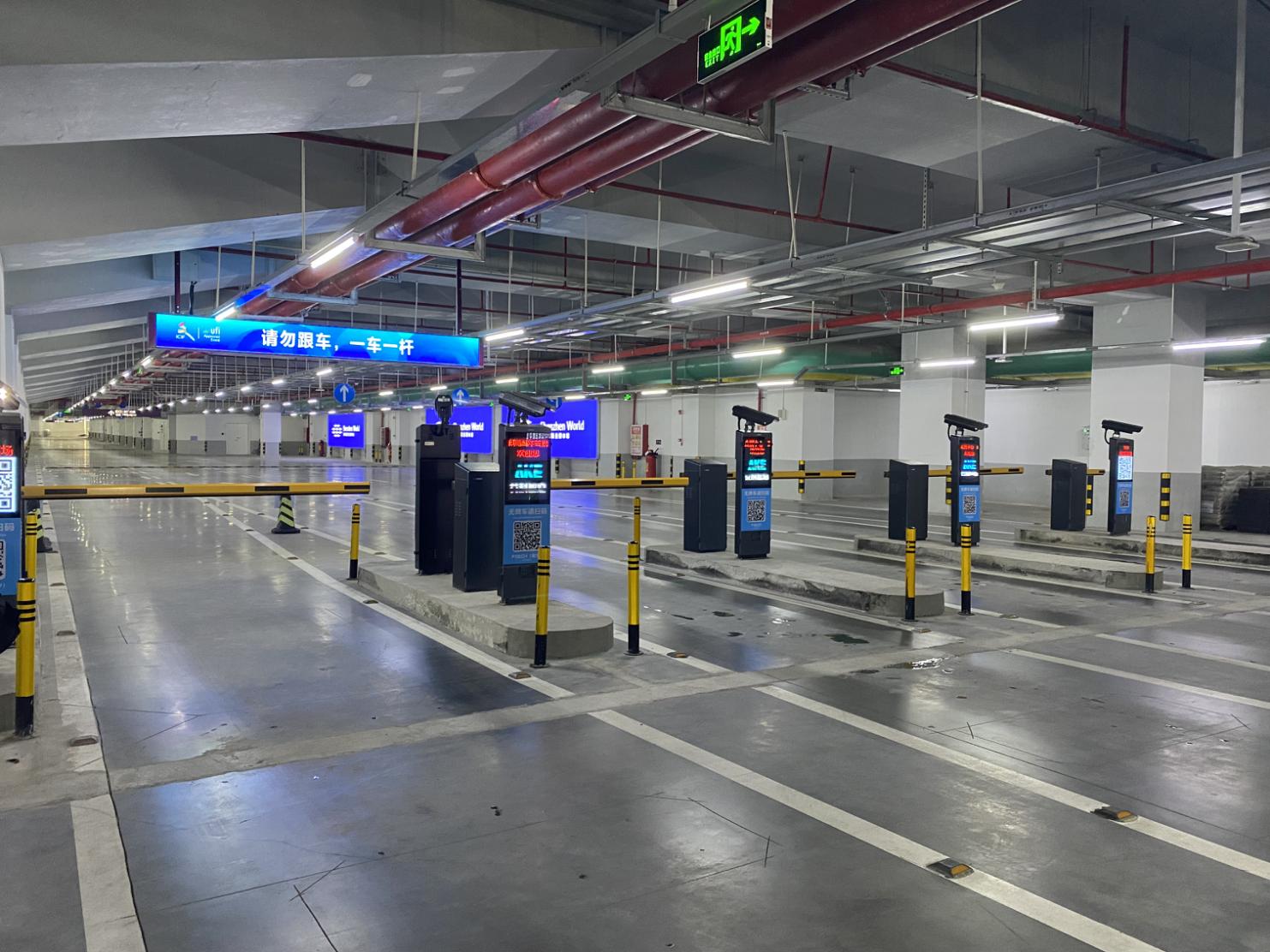
LPR or ANPR cameras identify vehicles before the barrier. The system can apply visitor permissions, exhibitor rules, VIP whitelists, temporary restrictions, and tariff logic without asking every driver to stop for a card.
3. Peak-lane mode configuration
At the morning peak, selected lanes may be configured as entry-only. At the evening peak, selected lanes may switch to exit-only. This lets the site match lane capacity to the event schedule.
4. Smart parking payment
Pre-payment QR codes, mobile payment, unattended payment, ETC payment where applicable, post-exit payment, and arrears recovery can reduce manual cashier pressure at the exit.
5. Parking guidance system
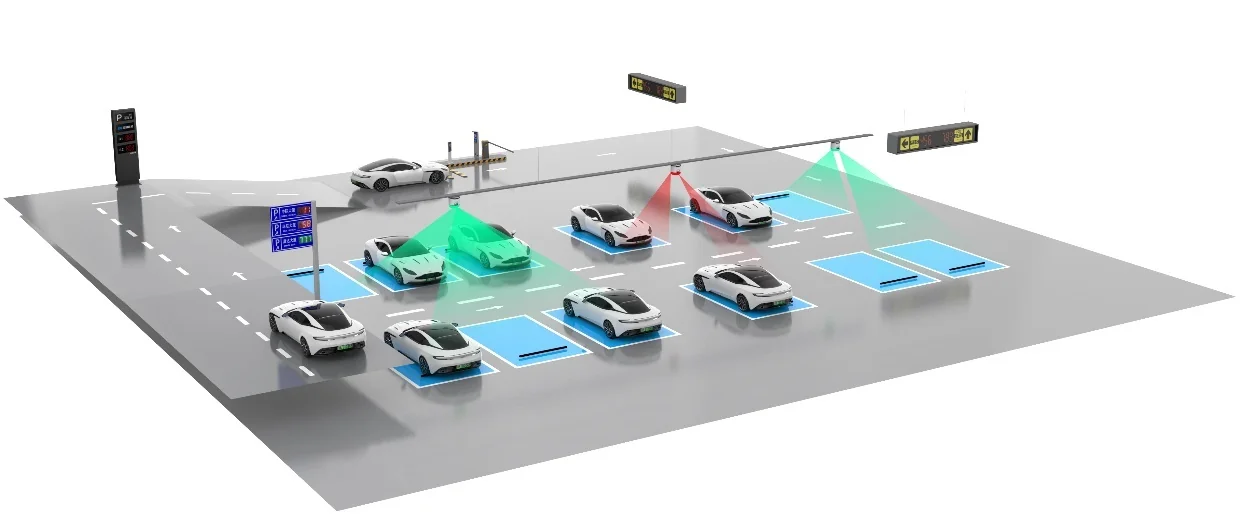
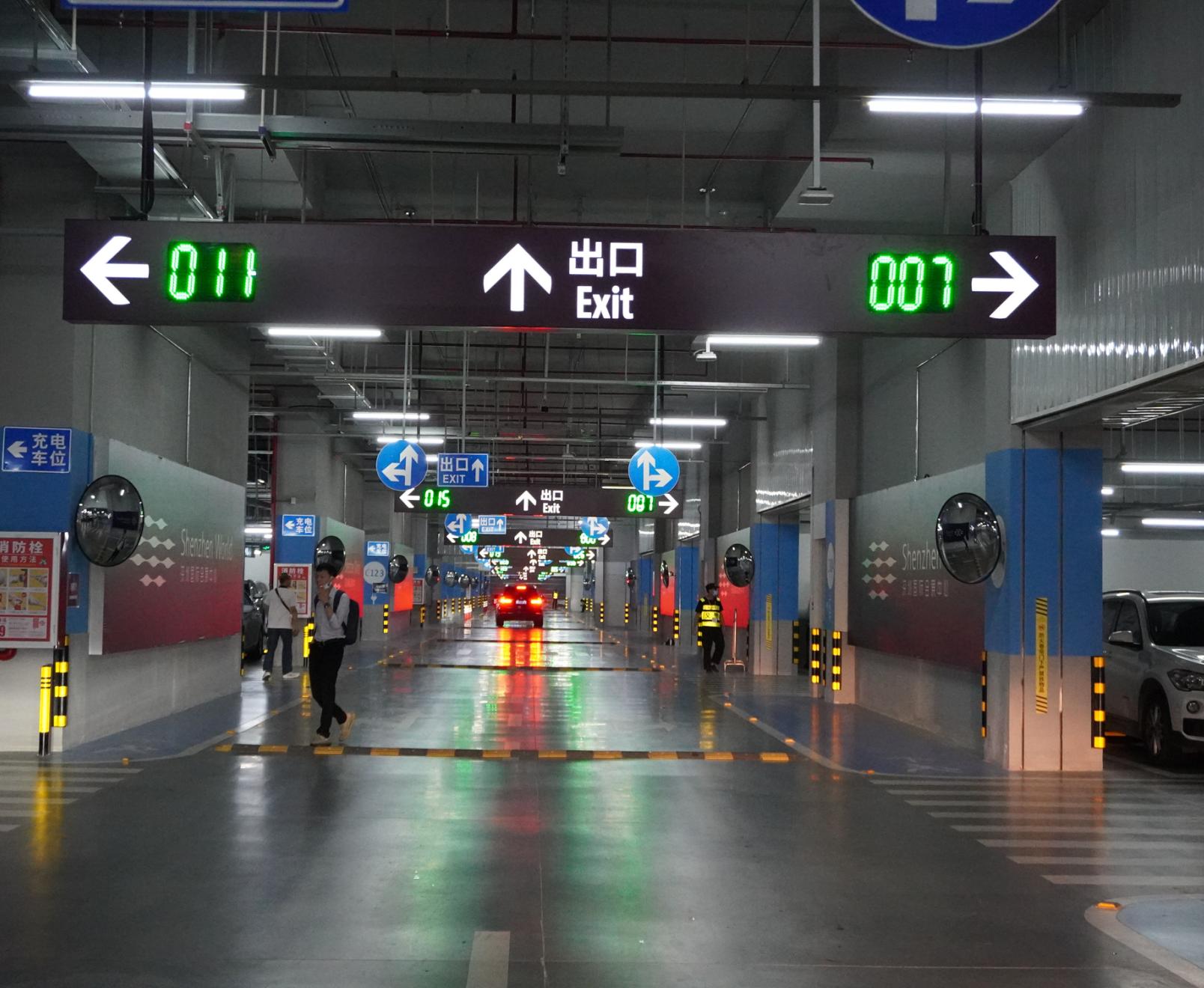
Outdoor parking areas can use high-mounted cameras and guidance displays. Indoor garages can use video detectors, parking guidance cameras, entrance displays, floor-level indicators, and zone signs to show available spaces in real time.
6. Reverse car finding
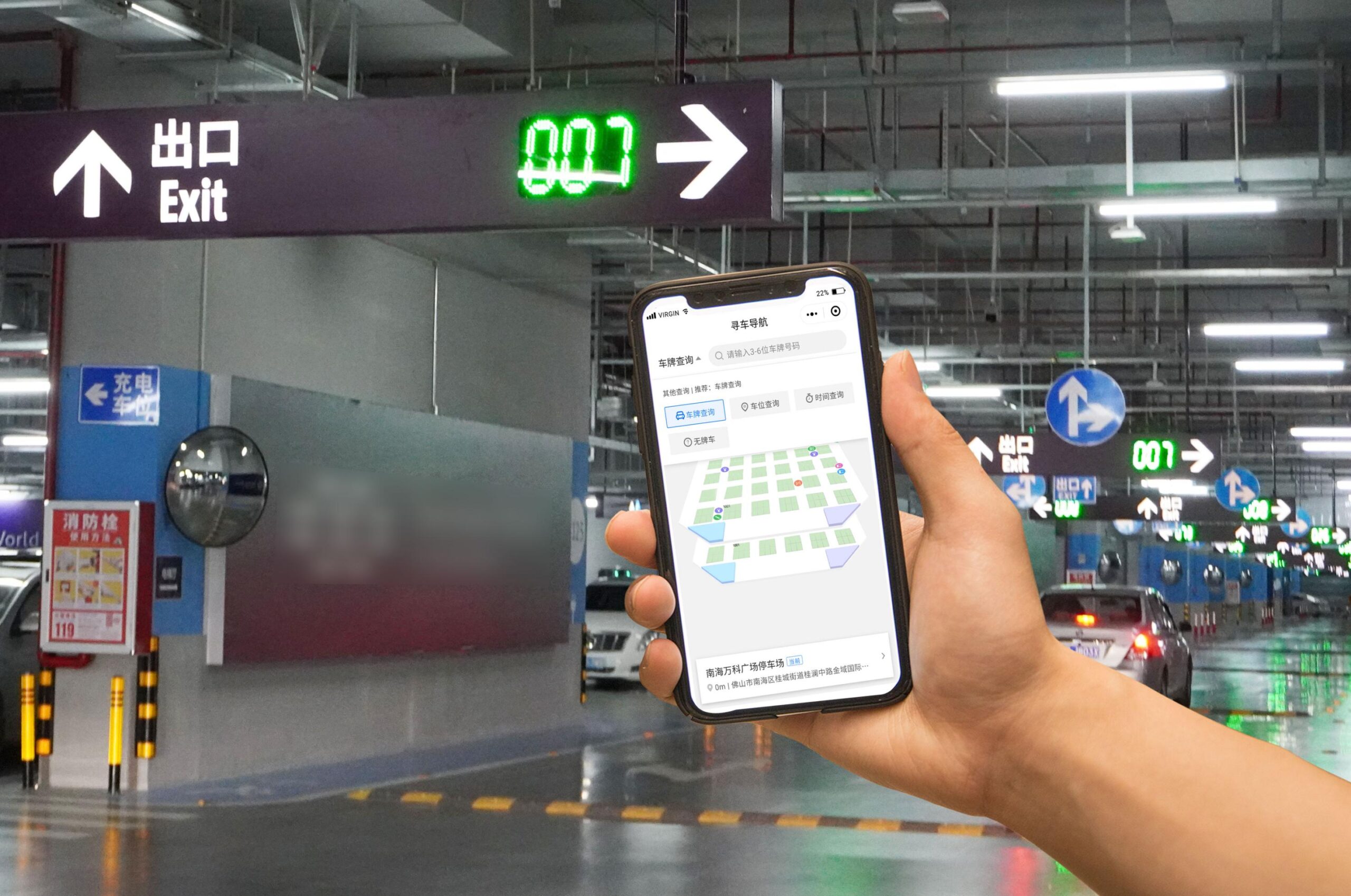
Drivers can search by license plate, parking bay, entry time, or no-plate record through a kiosk or mobile interface. This is important for visitors who parked hours earlier in a large, unfamiliar garage.
7. Operations monitoring
The management platform should monitor device status, resource health, business indicators, payment records, entry and exit logs, alarms, and work orders. This helps the venue operate the system instead of only owning the hardware.
Common Event Parking Problems and the Right Control Point
The mistake is to treat every problem as a gate problem. Exhibition centers need different controls before entry, at the lane, inside the garage, and during exception handling.
| Problem | Where it starts | Best control point | Recommended system capability |
|---|---|---|---|
| Road congestion around the venue | Approach roads and entrance queues | Before the driver reaches the venue | City guidance displays, available-space publishing, route diversion, and traffic coordination signals |
| Entry overload before opening | Too many vehicles arriving in the same window | Entrance lane configuration | Entry-only tidal lane mode, LPR fast recognition, and pre-approved visitor or exhibitor vehicle lists |
| Exit queues after closing | Payment and barrier release delay | Before the vehicle enters the exit lane | Pre-payment QR material, mobile payment, payment validity windows, and automatic barrier release after payment |
| Drivers cannot find spaces | Large lots, multiple floors, unclear zones | Parking area and floor decision points | Outdoor camera guidance, indoor video detectors, entrance displays, floor displays, and zone-level availability |
| Mixed vehicle types | Move-in trucks, VIP cars, staff cars, and emergency vehicles | Authorization and rule engine | Visitor vehicle import, VIP whitelist, special-vehicle release rules, and restricted-area permissions |
| Network or power interruption | Communication and field-device failure | Resilience and field fallback | Multi-network communication, mobile guard booth, manual plate correction, emergency release, and manual fee collection |
Vehicle Type Rules Matter More Than Most Specifications
In exhibition parking, vehicle identity is operational logic. Exhibitor trucks may be allowed during move-in but blocked from ground-level areas during show days. VIP vehicles may need multiple entries in a reserved time window. Police cars, fire trucks, security vehicles, engineering vehicles, waste collection trucks, and logistics vehicles all need controlled exceptions.
A practical parking management system project should define these rules before hardware installation. Collect exhibitor plates and driver data in advance. Import visitor vehicles into the operations platform. Configure VIP whitelists, restricted-area permissions, single-entry or multi-entry rules, and emergency keywords for manual or automatic release where appropriate.
Parking Guidance Reduces Internal Circulation
Parking guidance is not only a display system. In large venues, it reduces the time drivers spend circulating inside the site. Outdoor cameras can monitor large surface lots. Indoor video detectors or parking guidance cameras can monitor bays, zones, and floor-level availability. The vacancy data then feeds entrance displays, floor signs, and the central parking management platform.
Reverse Car Finding Turns Departure Into a Service Experience
After an exhibition, visitors often remember only the hall, floor, or entrance they used, not the exact parking bay. In a large venue, that creates long walking time and repeat circulation inside the garage.
A 2D or 3D reverse car-finding system solves the problem by linking LPR entry data, parking bay detection, floor maps, Bluetooth beacons where required, and a search interface. Drivers can use a kiosk or mobile interface to search by plate number, parking space, entry time, or no-plate vehicle record.
Case Snapshot: Shenzhen World Exhibition and Convention Center
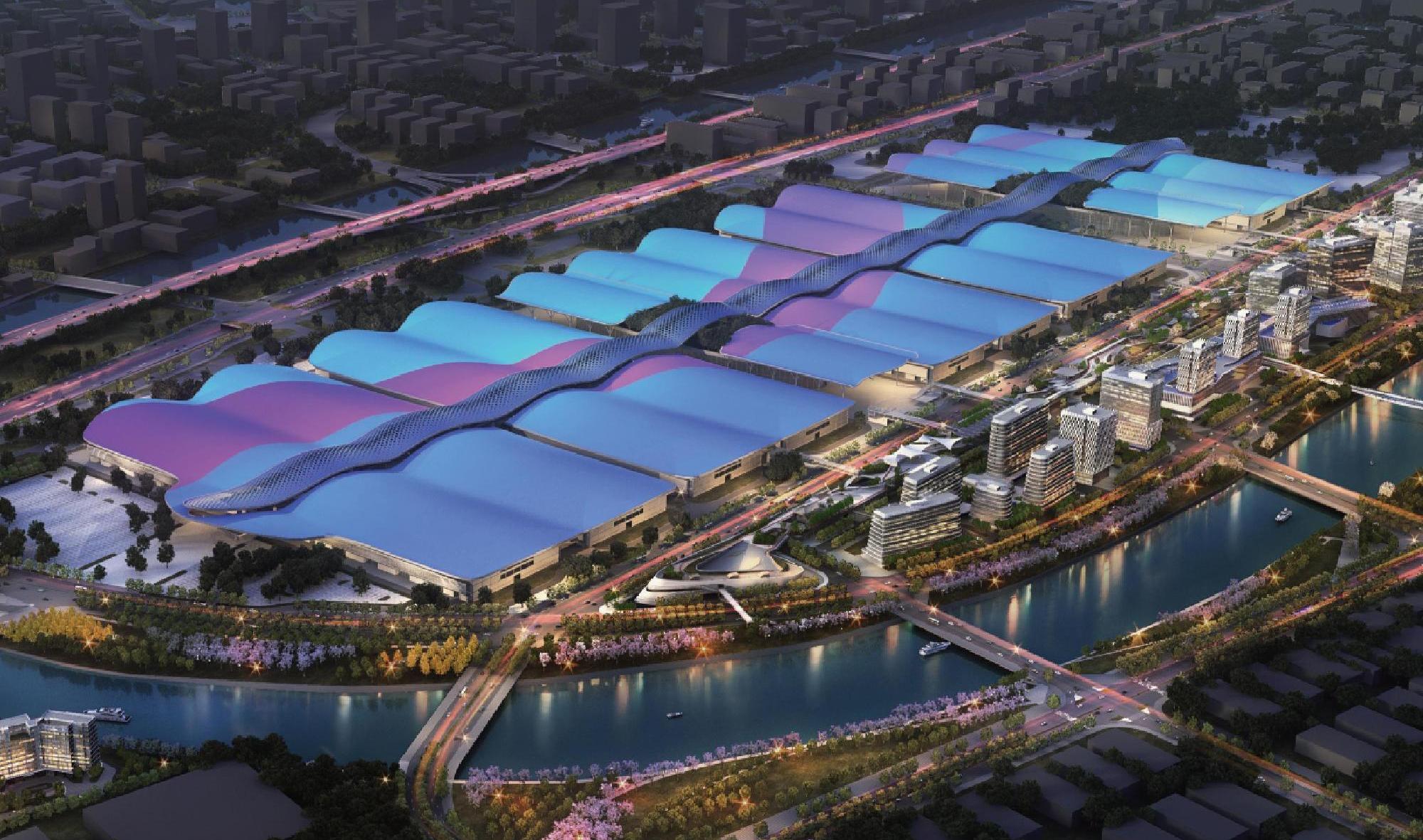
Shenzhen World is a mega exhibition venue in the Greater Bay Area. The AIPC member profile describes Phase I as covering 1.2142 million square meters of land, with 1.6005 million square meters of built-up area and 400,000 square meters of indoor exhibition area. The venue layout includes a 1.75 km central corridor, 19 halls, and five main entrances.
AKE Parking project materials for the parking deployment record a scale of 150+ channels, 12,000+ managed spaces, and peak average daily vehicle traffic above 20,000 during exhibitions. The deployment notes also list 165 LPR controllers and smart barrier gates, parking guidance, reverse car finding, PVD20 video detectors, car-finding kiosks, centralized multi-parking-lot management, and differentiated charging rules for ground and underground areas.
The operational lesson is clear: once a venue reaches transport-hub scale, parking is no longer a back-office facility. It becomes part of the event arrival, safety, revenue, and service experience.
Implementation Playbook for Operators and Integrators
- Map event traffic phases. Document move-in, show-day, peak-opening, peak-closing, and move-out traffic. Separate visitor cars, exhibitor cars, trucks, taxis, ride-hailing vehicles, VIP cars, and emergency vehicles.
- Design the lane strategy. Define how many lanes are normal entry, normal exit, tidal mode, VIP-only, truck-only, or emergency fallback.
- Choose the sensor stack. Use LPR cameras and barrier gates for access. Use high-mounted cameras for outdoor parking areas and video detectors or ultrasonic sensors for indoor bays.
- Move payment away from the exit. Place pre-payment QR material in elevators, corridors, garage walls, and pedestrian exits. Support the payment methods expected by the market and the venue operator.
- Test exception workflows. Simulate network outage, power failure, unreadable plates, unpaid vehicles, VIP misclassification, emergency release, and manual fee collection before the first major event.
- Connect operations and service. Monitor device health, transaction records, lane status, parking occupancy, and alarms. Add work orders, remote diagnosis, scheduled inspection, and after-sales response procedures.
Where AKE Parking Fits in the Exhibition Parking Stack
AKE Parking provides integrated parking hardware, access control, and software solutions for high-volume sites such as transport hubs, commercial complexes, smart cities, and large public venues. For an exhibition center, the relevant product stack includes LPR and barrier systems, parking guidance systems, parking management software, payment integration, car-finding kiosks, and operations support.
For a project discussion, share drawings, expected vehicle volume, lane count, payment requirements, vehicle authorization rules, and operating model. These inputs are more useful than choosing equipment by lane count alone.
FAQ: Exhibition Center Parking Management System
What is an exhibition center parking management system?
An exhibition center parking management system is an integrated platform that connects LPR cameras, barrier gates, payment channels, parking guidance displays, reverse car finding, vehicle authorization rules, and operations monitoring to manage high-volume event traffic.
Is a parking guidance system necessary for an exhibition venue?
It is recommended when the site has multiple floors, large outdoor areas, or repeated event peaks. Parking guidance reduces driver circulation by showing available spaces at the right decision point.
How can smart parking payment reduce exit congestion?
Pre-payment QR codes and mobile payment move the payment action away from the exit lane. Once payment is confirmed within the valid departure window, the LPR system can release the vehicle faster.
What should be included in a parking management system project specification?
Include lane rules, LPR recognition requirements, barrier gate type, payment methods, parking guidance coverage, reverse car-finding method, whitelist rules, network resilience, platform integration, reporting, and support response levels.
How should operators handle trucks, VIP cars, and emergency vehicles?
Operators should collect vehicle data before the event, assign visitor or exhibitor permissions, create VIP and special-vehicle whitelists, set restricted-area rules, and configure emergency or security vehicle handling procedures.